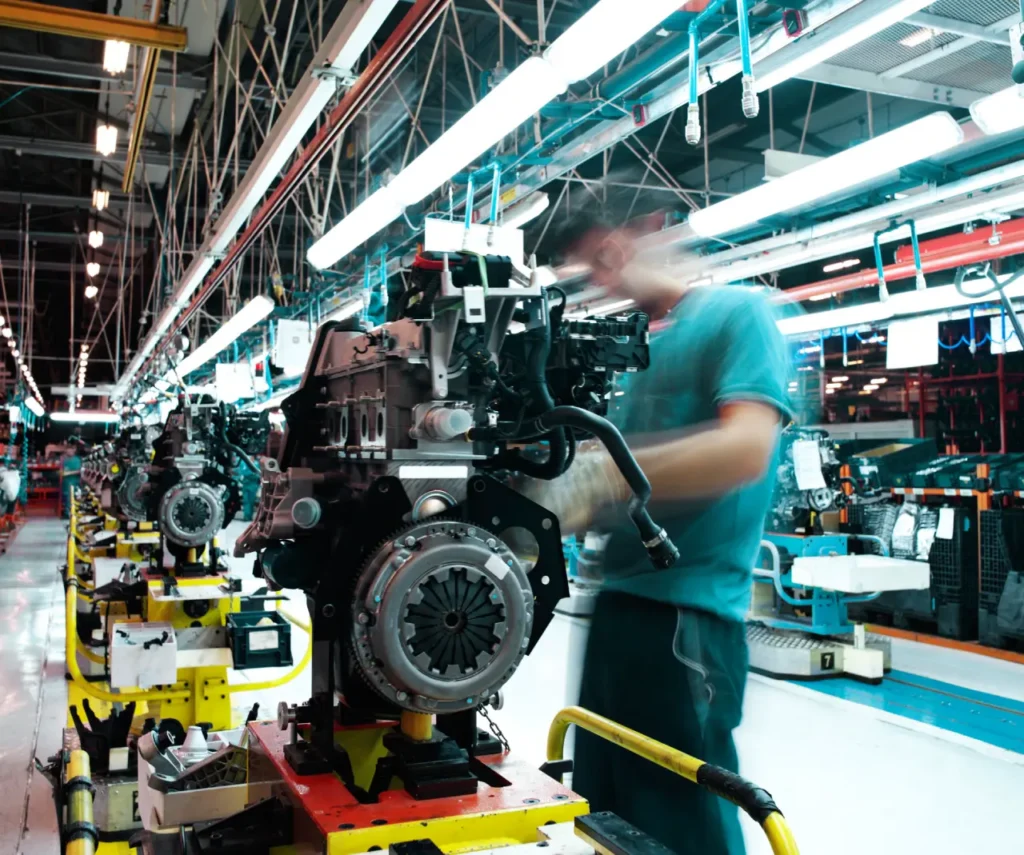

Logistics Engineering and Consulting
Industrial logistics solutions tailored to the automotive industry's needs
In the automotive industry, the performance of automakers and suppliers depends on the seamless synchronization of the workflows required for vehicle manufacturing and assembly.
Whether the vehicles are gasoline-powered, hybrid, or electric, the supply of parts to production lines, inventory management, the preparation of components and spare parts, adherence to production schedules, and the traceability of operations must all be perfectly managed to ensure uninterrupted production. Engines, batteries, body parts, automotive equipment, and components: every part must be available in the right quantity, in the right place, and at the right time.
In an environment characterized by high production rates, just-in-time operations, and stringent requirements for quality, costs, and lead times, automotive logistics is thus a key driver of performance. Onet Logistics & Production supports players in the automotive industry in managing and optimizing their logistics operations. Our teams work directly on the factory floor to ensure smooth material flows, support production rates, and sustainably improve operational performance.
The automotive industry relies on highly demanding organizations, in which logistics must be seamlessly integrated into vehicle manufacturing and assembly processes. Changes in transportation patterns and the transition to electric vehicles are also transforming production lines. The integration of new components—particularly batteries and equipment related to new powertrains—requires constant adaptation of logistics operations.Our operations are designed to address several major challenges.
Production and assembly lines must have the right part, in the right quantity, in the right place, and at the right time. Flow management can rely on Kanban systems, logistics rounds or milk runs, kitting, and replenishments triggered based on actual consumption.
The goal: to minimize on-line inventory while ensuring the constant availability of spare parts, motors, batteries, body parts, and other components needed for vehicle production.
In the automotive industry, logistics operations are directly linked to the pace of the production and assembly lines.
The receipt of components, putaway, kitting, routing, and supply to workstations must be synchronized with the vehicle production schedule.
Managing priorities, monitoring work in progress, and quickly identifying the risk of shortages make it possible to anticipate deviations that could impact production.
Reliable inventory management is essential to ensuring the availability of components and spare parts and to preventing stockouts or procurement errors.
Our teams can handle location management, cycle counts, variance analysis, anomaly resolution, and storage area optimization.
Management methods tailored to the characteristics of products, mechanical components, engines, batteries, body parts, and equipment—as well as to site-specific constraints—also help ensure reliable inventory turnover and supply.
In a complex industrial environment, every movement of a part or component must be identifiable and traceable.
Barcode and QR code scanning, WMS, and tracking tools make it possible to record the various stages of the workflow: receiving, storage, picking, order preparation, movement, feeding assembly lines, and shipping.
This traceability helps ensure the reliability of operations, makes it easier to locate components, and provides an accurate record of all movements.
Logistics quality directly contributes to the quality of the vehicles produced.
Incoming inspections, verification of part numbers and quantities, adherence to preparation standards, securing components, handling anomalies, and managing nonconformities help minimize errors that could impact production and assembly lines.
Standardizing operating procedures and training staff also help ensure a consistent level of quality over time.
Changes in production schedules, the launch of a new car model, the transition from internal combustion engines to electric vehicles, increases or decreases in production rates, changes in powertrains, or supply chain disruptions: logistics organizations must be able to adapt quickly. The integration of new components—particularly those related to electric vehicles and batteries—may require adjustments to storage areas, material-handling equipment, logistics routes, and production line supply methods.
The versatility of employees, adjustments to resources and schedules, changes to logistics routes, and the resizing of order-fulfillment areas all help us accommodate these fluctuations in workload.
Onet Logistique & Production offers automotive industrial logistics services that are directly integrated into production environments. From receiving spare parts and components to transporting them to assembly stations, our teams can manage all or part of the supply chain required for vehicle production.
Our operations are scaled and tailored to the specific constraints of each site to help ensure smooth material flows and the continuity of automotive production.
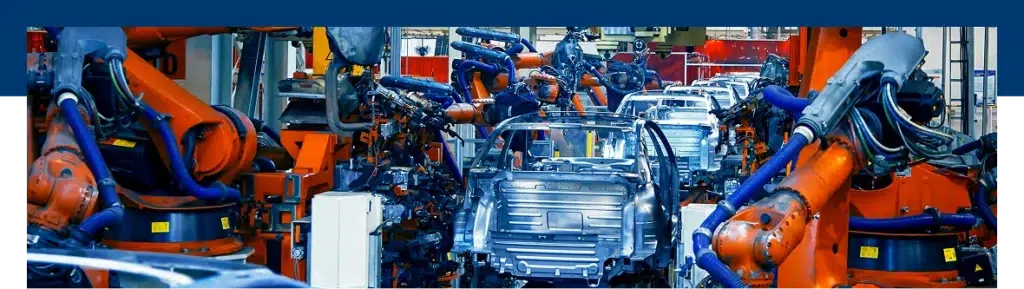
Automotive environments bring together employees, material-handling trucks, transportation vehicles, industrial equipment, and a constant flow of goods and components. The increasing volume of traffic on industrial sites requires rigorous organization of traffic flow.
Employee training, access control management, the separation of pedestrian and vehicle traffic, traffic standards, audits, reporting of anomalies, and preventive measures implemented directly on the ground all contribute to ensuringoperational safety.
Faced with these challenges, automakers and equipment manufacturers are seeking partners capable of guaranteeing operational continuity while helping to improve their industrial performance.
Onet Logistics & Production supports major players in the automotive industry with the management of their operations. Our teams work with the following companies, among others:


This experience working with automakers, automotive suppliers, and mobility manufacturers allows us to understand the challenges associated with vehicle manufacturing and to propose solutions tailored to requirements in production, quality, safety, and performance.
Beyond simply carrying out operations, Onet Logistique & Production integrates its services into a process of continuous improvement and digital transformation.
Digital tools make it possible to gradually replace paper-based processes and manual data entry with solutions that are directly accessible to operational teams. Mobile devices, tablets, scanners, digitized work instructions, and real-time reporting of issues all help ensure the reliability of information and speed up its availability for business management.
A clear overview of material flows makes it possible to anticipate risks that could affect vehicle manufacturing and assembly. WMS, tracking tools, work-in-progress tracking, priority management, and alerts make it possible to monitor operations from the receipt of spare parts and components through to their delivery to the production lines.
Our organizations rely on KPIs tailored to the specific challenges of each service: service levels, productivity, inventory reliability, on-time delivery, anomalies, order fulfillment quality, processing times, and compliance with operational commitments. Monitoring these indicators allows us to quickly identify variances and implement the necessary corrective actions.
Digital dashboards enable Onet teams and our clients to share a common view of business operations: volumes, safety, quality, lead times, productivity, anomalies, and action plans. This data can be integrated into daily management routines to facilitate decision-making and help teams focus on operational priorities.
Digital recording of the various stages of the process makes it possible to precisely track the movements of parts, components, and products. This traceability makes it possible, in particular, to determine their status, location, and the history of operations performed, and contributes to the overall security of the workflow.
Our teams implement continuous improvement initiatives to optimize processes and reduce non-value-added activities. Methods such as 5S, on-site observation, Gemba Walks, standardization of operating procedures, root cause analysis, structured problem-solving, and Kaizen projects enable us to address issues related to movement, wait times, errors, productivity, and the quality of operations.
Our goal: