FSOH and ergonomics: the expertise of Onet Technologies
Onet Technologies engineers define Socio-Organizational and Human Factors (SOHF) and ergonomics as a discipline with a common goal: improving working conditions and making activities more reliable. Terminology differs depending on the customer, the area of intervention and the methodology applied. Here's a closer look at this profession, to which a team at Onet Technologies is dedicated.
What are ergonomics, FOH and SOH?
Ergonomics can be defined as the adaptation of work to man. It is the scientific study of the relationship between man and his means, methods and working environment. Its aim is to develop devices (technical, organizational and environmental) with maximum comfort, safety and efficiency in the workplace and in life.
FOH is an approach designed to analyze the factors influencing operational performance. It can be applied in all sectors (risk and non-risk industries: nuclear, chemical, production, transport, medical, etc.). The study of occupational health and safety (OH&S) enables the prevention of incidents and accidents to be strengthened, in particular through ergonomic analysis. In the nuclear sector, this discipline focuses more on human failures, with a view to making activities more reliable and avoiding any nuclear safety incidents.
SOH is also a people-centered approach, focusing on human interactions and the various components of work situations, as with FOH, but with a socio-organizational approach.
FOSH, a little-known discipline
FSOH is...
A cross-functional job requiring special skills and technical expertise;
A business that focuses on use (analysis of the operator's work activity);
A complementary approach to technical engineering.
FSOH is not...
A costly and unnecessary additional constraint;
Ready-made solutions;
A simple question of common sense.
FSOH are essential in industry: they have a direct impact on the efficiency and productivity of operations. This approach enables us to design work situations that make operators' activities more reliable, while integrating safety, security and performance.
FSOH studies enable us to understand what conditions human activity, and to act on work situations and their organization, with a view to controlling risks. Several factors make up human activity, such as work organization, team and skills management, technical and documentation systems, and the work environment. Taking FSOH into account is part of a preventive, corrective and anticipatory approach aimed at preventing human failures and improving working conditions. This discipline applies to all sectors: industry, the service sector and others. In the nuclear sector, FSOHs play a major role in accident prevention and in establishing a safety culture. For example, they played a role in the nuclear accidents at Three Mile Island in the USA, Chernobyl in Ukraine and Fukushima in Japan.
Onet Technologies' FSOH engineers' view of their job
Anaïs and Laetitia have been ergonomics consultants and FSOH engineers at Onet Technologies since June 2022 and May 2023 respectively. In this exclusive interview, they share their views on their profession.
Our business is exciting because of its multi-disciplinary nature and wide range of applications. We contribute to the evolution of each project and intervention we undertake. We are also enriched by the exchanges we have with the various players and specialists in other fields.
We work in teams with a view to improving working conditions, enhancing productivity and, above all, making activities more reliable. This gives meaning to our work.
What we like most about this job is its variety. No day is the same, and we have the opportunity to learn constantly. We can contribute our expertise to help teams improve their working conditions. We do some office work, but we're also lucky enough to have access to the field, to be as close as possible to real work and in contact with operational staff. Our methodology enables us to bring a complementary, people-centered vision of work that is all too often overlooked in the face of technical and financial considerations. Our aim is to integrate the needs of operational staff / end-users / workers.
Why use FSOH in the workplace?
Integrating this profession into projects as early as possible enables :
Financial and time savings: anticipating the need to take people into account means avoiding corrective action with less room for maneuver and higher costs;
Improved working conditions for future operatives by adapting work to people and their environment, as well as organizational, technical and documentary systems.
Our interventions are aimed at improving business performance, safety and security: they help to avoid accidents, prevent the occurrence of events, limit turnover, etc.
The application of FSOH is relevant to all projects/contracts: design, modification, operation, dismantling, workstation layout, use of HMI and work tools, etc.
What Onet Technologies projects have you worked on?
For example, we took part in the following projects:
Uc2/Uc3
Eden
Rcd ZN
Marcoule technocenter control room
We have also worked on operating facilities such as the IZEN, UF4 decanting, etc.
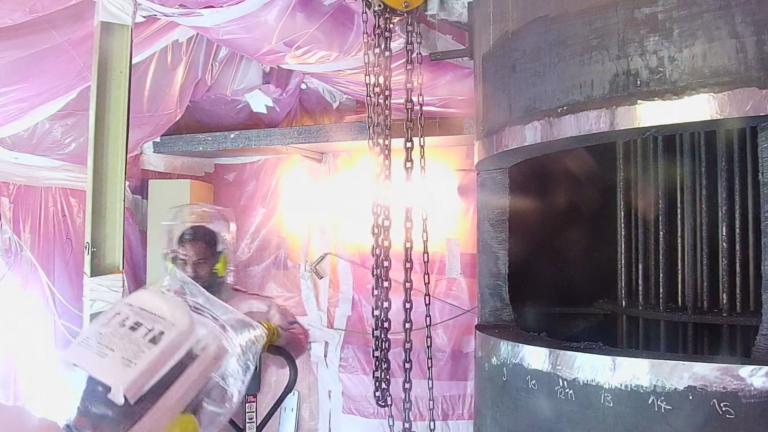
Uc2/Uc3 project
EDEN project
RCD/ZN project
Control room at the Marcoule technocenter.
What qualifications and skills do you need for this job?
To work in this field, you need a Master's degree or an engineering diploma in ergonomics (bac +5 level).
Above all, this job requires great adaptability. The ability to communicate effectively with different people and to analyze situations is essential. Trust is important to establish fruitful working relationships. We need to be good listeners, able to assert our points of view while remaining diplomatic and flexible. We often have to work within constraints. Autonomy and proactivity are also essential skills.
Would you like to call on Onet Technologies' FSOH engineers? Contact us today !