Since January 2, 2024, Onet Technologies has been working for EDF DP2D(Direction de Projet Déconstruction et Déchets) on the dismantling of France's first pressurized water nuclear reactor. The contract, won by Onet Technologies and its co-contractors Netman and Kaefer Wanner, will last four years, with an option for a further two years.
Onet Technologies' missions
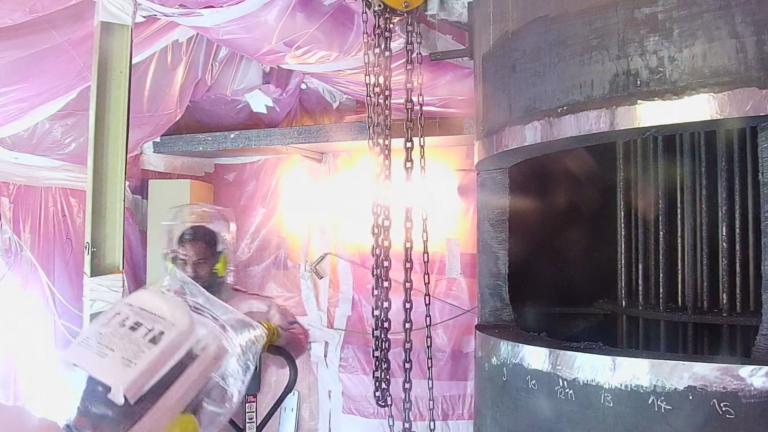
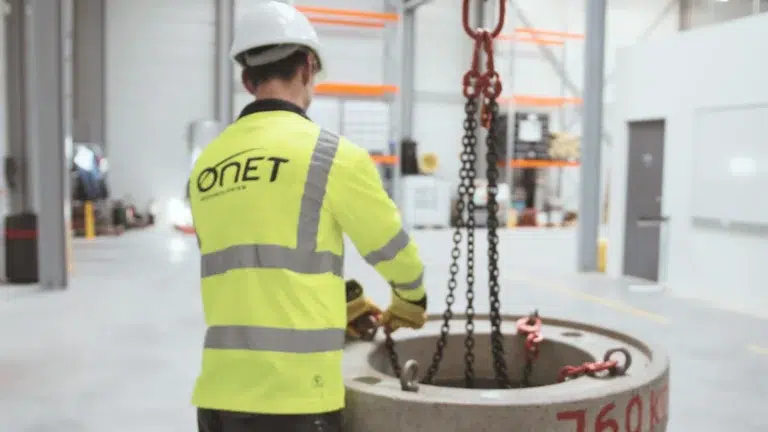
Onet Technologies and its co-contractors are providing EDF DP2D with a comprehensive site assistance service (PGAC). The tasks entrusted to Onet Technologies include logistics, waste management, radiation protection risk prevention and handling. 15 Onet Technologies employees are mobilized for this service, enabling the customer to concentrate on its core business.
As the market's agent, Onet Technologies has a number of objectives to achieve on behalf of its customer EDF DP2D:
- The contract is off to a good start, in line with expectations.
- Deliver customer satisfaction through transparent communication.
- To ensure that each company in the group finds its place in the missions entrusted to it.
- Assisting EDF DP2D at other sites such as Creys-Malville and Bugey 1.
With this nuclear logistics contract, Onet Technologies is continuing its commitment to working closely with its customers, thereby contributing to their day-to-day performance.
What is Chooz A?
The Chooz nuclear power plant is located 3km from the Belgian border and comprises 3 reactors spread over 200 hectares. Two reactors are in operation, Chooz B1 and B2, and the third, Chooz A, is being deconstructed. Built between 1962 and 1967, Chooz A is France's first pressurized water nuclear reactor, with a capacity of 305 megawatts. Another special feature is that the reactor and its main nuclear auxiliaries are installed in rock caverns on the side of a hill. After 24 years of operation, the plant was shut down in 1991.
In 1993, a final shutdown decree enabled EDF to begin preparatory work on dismantling the plant: 99.9% of the plant's radioactivity was eliminated from the site, thanks in particular to the removal of nuclear fuel.
In 1999, partial dismantling of the facilities began: dismantling and removal of the gallery linking the cavern to the facilities, decontamination and demolition of the nuclear buildings...
In 2007, the request for complete dismantling was authorized by the French Prime Minister. Dismantling focuses on the nuclear circuits, followed by the reactor cavern. The final stages of decommissioning involve clean-up, site rehabilitation and tritium monitoring.